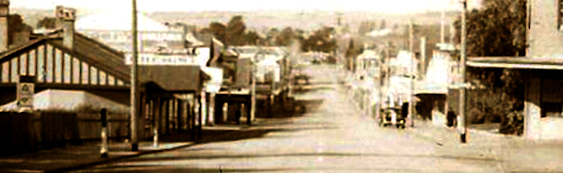
"A householder of Heidelberg yesterday put forward the opinion of the residents why Heidelberg—from six and a half to eight miles of the General Post-office—stood still while other more remote and less picturesque centres were building to the limits of their capacity.
"There was," he said, "one house on these estates 50 years ago, there is one house to-day, and there will be one house 50 years hence unless better travelling facilities are provided for the people who live over half a mile from the railway."
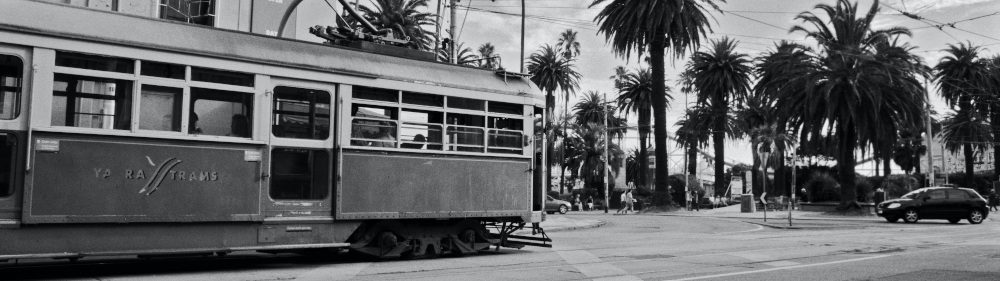
A determined effort is not being made to obtain a tramway service for the district.
The householder quoted above pointed out that there were no land-booming influences at the back of the movement. Practically the whole of the estates had been subdivided and sold. But the purchasers would not build upon the blocks till they had facilities for getting to and from business, and their womenfolk could get to the city occasionally.
There are 5,526 vacant lots, including "broad acres," and about 90 per cent of this land has been purchased by people who are anxious to build and settle in the district. Much of the land was purchased by people who are anxious to build and settle in the district.
Much of the land was purchased some time ago, when it was understood that the Heidelberg council contemplated the construction of electric tramways to "feed" the railways. The municipality at the time was prepared to shoulder the responsibilty but the new Tramways Act deprived it of the right to establish the system.
The complaint of the residents and the municipality now is that the act prevents the council from making the line, and the tramways board will not carry out the work.
This position persists in face of the fact that ratepayers whose properties would benefit by the line are prepared to guarantee the board against loss.
One proposal was that a line would commence at Clifton Hill, follow the Heidelberg road to Station street, Fairfield, follow Station street into Darebin road; thence to Livingston street, Ivanhoe, along Livingston street to the Ivanhoe station, and along the Lower road to the Heidelberg station. Another branch was to form a loop by following the Upper road to Heidelberg.
It will be seen that this proposal establishes a tramway route from Heidelberg to the city, but it is said by those who know the locality that the line would not prejudicially affect the railway revenue. The Upper and Lower road branches would carry passengers to the Heidelberg station, and other sections would carry them to Fairfield and Clifton Hill. The railway traffic would expand with the increased settlement.
Mr. A. Cameron, the chairman of the Tramways Board, has answered these claims. He says that 6,000 residents to the square mile are required to justify tramways extension; and that Heidelberg cannot show anything of the kind. This, of course, raises the old question whether railways and tramways should precede or follow settlement.
Private ownership would doubtless take the same view here that it takes in America—that settlement would follow close upon the heels of construction. But private enterprise would have to consider nothing but the development and expansion of the system upon a payable basis. It would not be liable to have its revenue set apart for the upkeep of the charities and other extraneous purposes, as the Tramways Board has.
The outstanding fact is that the municipality wants a tramway. The board will not construct it, and the law will not allow the municipality itself to construct it.
The municipality has over 5,000 vacant blocks of ground, which its officials consider would be occupied by 20,000 people if tramway facilities were available. The blocks are all over half a mile distant from the railway. The matter, the municipality holds, should be inquired into at once by the Parliamentary Railways Standing Committee.